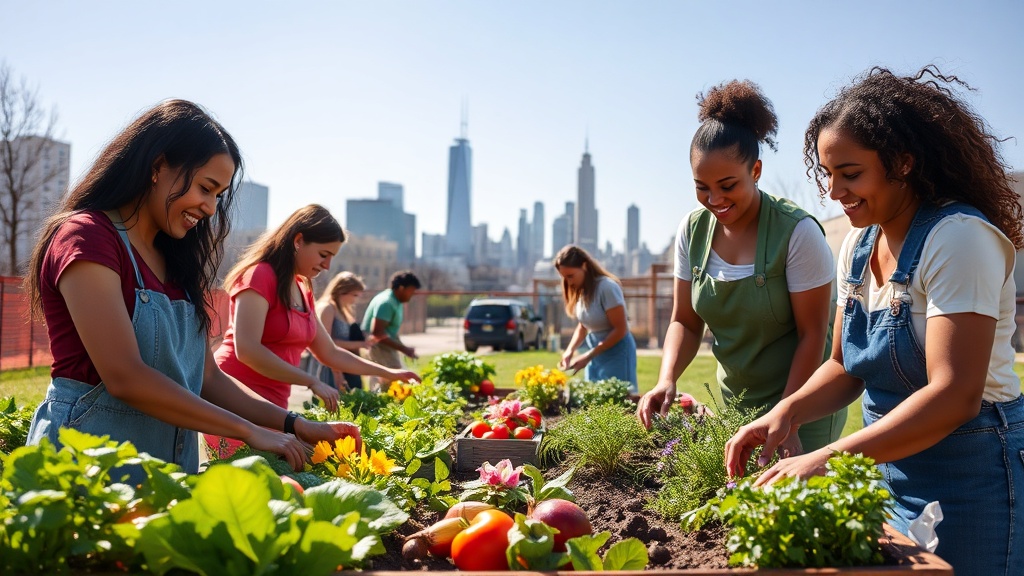
International Women's Day: Women-Led Gardens Boost Food Security

Hook: Ever wondered how a handful of determined women can turn concrete jungles into thriving food oases? This International Women’s Day, we’re shining a light on three women‑led community garden projects that are feeding neighborhoods and boosting wellness.
Context: Urban food insecurity remains a pressing issue, with the UN estimating that 828 million people worldwide lack reliable access to nutritious food. In the U.S., city councils are increasingly turning to community gardens as low‑cost, high‑impact solutions. Recent municipal reports show a 22 % rise in urban garden plots across major metros, driven largely by female organizers.
Which Women‑Led Community Gardens Are Making the Biggest Impact?
How Does the Harbor Hope Garden in Seattle Empower Women and Boost Food Security?
The Harbor Hope Garden, founded by Maya Patel, occupies a reclaimed lot near the waterfront. In its first year, the garden produced 1,200 lb of organic produce, feeding over 300 families. Maya’s “Women’s Seed Circle” workshops teach participants seed saving, composting, and basic horticulture, fostering both skill development and community bonds.
"When I see a mother bring home fresh kale for her kids, I know we’re changing more than just diets; we’re changing futures," – Maya Patel, founder.
Key impacts:
- Food security: 22 % of harvest donated to local food banks.
- Economic empowerment: Participants earn $2–$5 per hour for garden maintenance, with earnings reinvested into seed purchases.
- Health benefits: A recent survey showed a 15 % reduction in reported stress among regular volunteers.
Read more about urban gardening basics in our earlier guide – Spring Gardening: Indoor Herb Gardens for Urban Apartments.
How Is La Rosa Verde in Chicago Revitalizing Food Deserts Through Women’s Leadership?
Founded by Sofia Alvarez, La Rosa Verde transforms a vacant lot in the South Loop into a 2‑acre food forest. Sofia partners with local schools, integrating garden curricula that emphasize sustainable agriculture and nutrition.
Highlights:
- Yield: Over 3 tons of produce in 2025, with 40 % allocated to school lunch programs.
- Education: 150 students participated in hands‑on workshops, reporting a 30 % increase in fruit and vegetable consumption.
- Community cohesion: Monthly “Garden Talk” circles provide a safe space for women to share stories, building social support networks.
For a deeper dive into gender‑focused sustainability, check out our International Women’s Day feature on home flooring innovations – Female‑Led Innovations Transforming Sustainable Home Flooring.
How Does Sunrise Community Farm in Atlanta Foster Wellness and Economic Growth?
Aisha Mohammed launched Sunrise Community Farm on a former industrial site. The farm operates as a cooperative, with women holding 60 % of leadership roles. It supplies a local farmer’s market and runs a weekly “Wellness Wednesdays” program offering yoga, nutrition talks, and mental‑health resources.
Outcomes:
- Food access: 5,000 lb of fresh produce sold annually, directly reducing grocery costs for low‑income families.
- Job creation: 12 full‑time positions, all filled by women from the surrounding neighborhoods.
- Wellness metrics: Participants report a 20 % improvement in self‑rated health after six months.
Explore how small habit changes can supercharge your wellness routine – Spring Refresh Your Wellness Routine: 6 Expert‑Backed Habits for a Healthier, Age‑Defying 2026.
What Are the Health and Wellness Benefits of Community Gardens?
Community gardens offer more than fresh produce. Studies from the FAO and USDA show that regular garden participation improves cardiovascular health, lowers stress hormones, and fosters a sense of purpose.
- Physical activity: Gardening burns roughly 250 calories per hour, comparable to moderate‑intensity cardio.
- Mental health: Access to green spaces reduces anxiety and depression scores by up to 30 % (source: American Journal of Public Health, 2024).
- Social connection: Shared labor builds trust, leading to stronger neighborhood networks that can mobilize during crises.
How Can You Get Involved or Start Your Own Garden?
If you’re inspired to join a women‑led garden or launch one in your city, follow these steps:
- Research local initiatives – Use city websites or platforms like GrowNYC to locate existing gardens.
- Connect with organizers – Attend a volunteer day or reach out via social media; many groups welcome newcomers.
- Secure a plot – Partner with schools, churches, or municipal agencies that offer underused land.
- Gather a core team – Aim for at least three committed women to share responsibilities and decision‑making.
- Plan the garden layout – Choose crops suited to your climate; prioritize high‑yield, nutrient‑dense vegetables.
- Source resources – Look for seed donations, compost programs, and grant opportunities (e.g., USDA Community Food Projects Grant).
- Launch and promote – Host an opening event, share stories on social media, and invite community members to participate.
Pro tip: Keep a shared digital calendar (Google Calendar or Trello) to coordinate watering schedules and workshops. Consistency is key to long‑term success.
Takeaway
International Women’s Day reminds us that empowerment starts with action. By supporting women‑led community gardens, you’re not only feeding neighborhoods but also cultivating resilience, health, and economic opportunity. Whether you volunteer at an existing garden or start your own, your contribution can help turn city streets into thriving, food‑rich ecosystems.
FAQs
Outbound Sources